Best Guard Dogs for Families and Kids: A Complete Guide
Most families searching for a guard dog are not looking for intimidation. They want something more specific: a dog that makes their home feel safer without changing how it feels to live there. They want a dog that plays in the backyard, hangs out with the kids, and still has the presence and training to matter when it counts.
That balance is harder to find than most people expect. Breed reputation alone does not get you there. What actually matters is temperament, professional training, and a dog that has been prepared for real family life, not just controlled environments.
Priority 1 Canine places finished family guard dogs, not started prospects. If you want the practical version of this guide, see our family protection dogs page, the dogs available for placement now, and what a protection dog costs.
This guide breaks down the best guard dog breeds for families, explains what to look for before you choose one, and covers the difference between a guard dog and a professionally trained protection dog, which is a distinction that changes everything.
What Is the Best Guard Dog for Families?
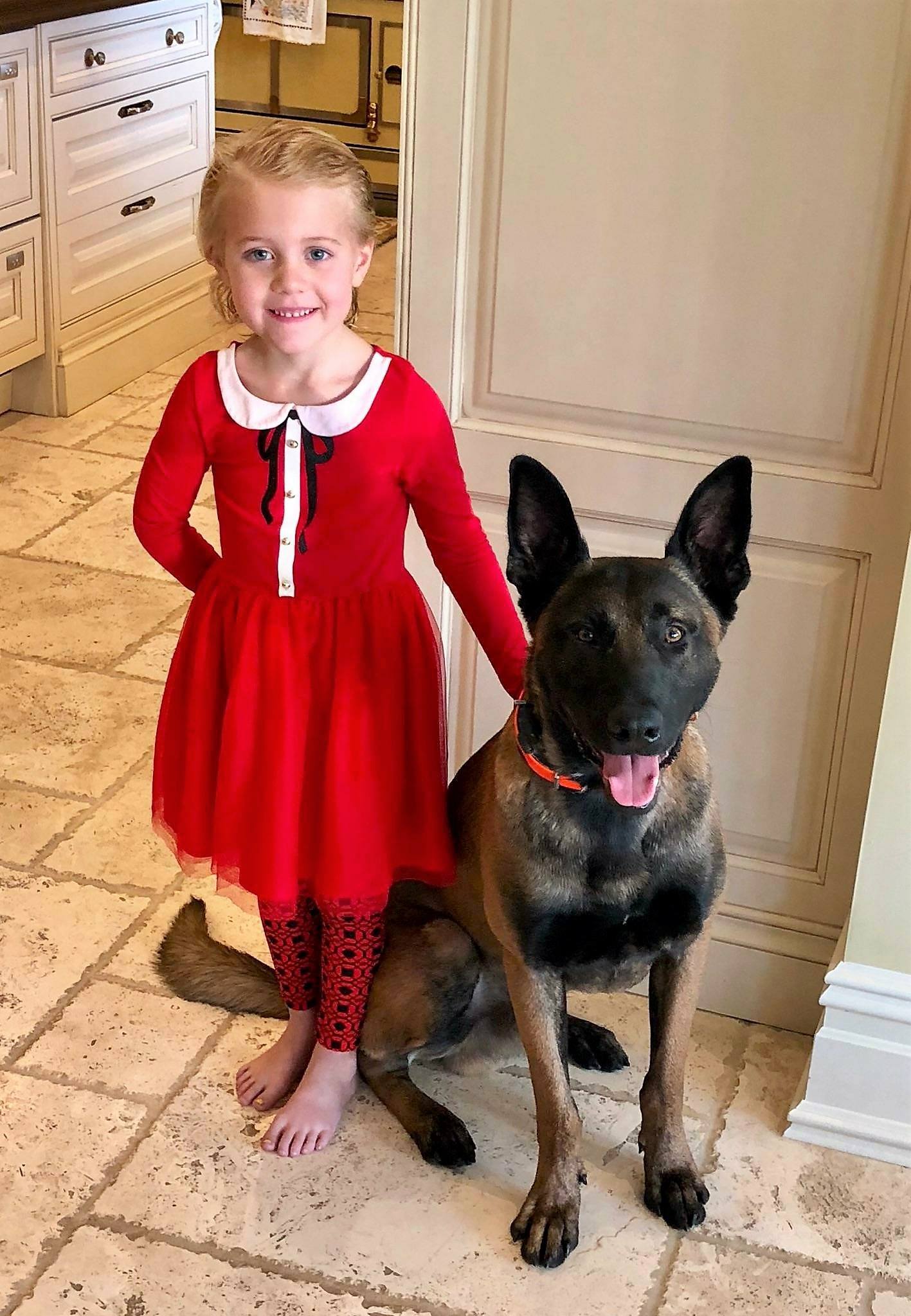
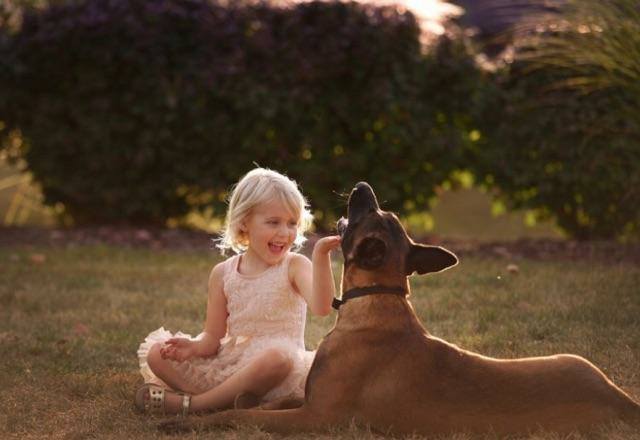
The best guard dogs for families combine natural protective instincts with a calm, stable temperament around children. Breeds like the German Shepherd, Belgian Malinois, Dutch Shepherd, and Rottweiler are consistently top choices.
But breed alone is not the answer. A dog's individual temperament and the quality of its training matter far more than its lineage or reputation. The right family guard dog is safe and reliable around children, guests, and other pets, and responds appropriately to real threats rather than everyday household activity.
At a Glance: Top Family Guard Dog Breeds Compared
| Breed | Temperament with Children | Energy Level | Protective Instinct | Trainability | Size | Best Suited For |
|---|---|---|---|---|---|---|
| German Shepherd | Gentle, patient | Moderate-High | High | Excellent | Large | Active families, varied environments |
| Belgian Malinois | Loyal, engaged | Very High | Very High | Excellent | Medium-Large | Active handlers, structured households |
| Dutch Shepherd | Watchful, loyal | High | High | Excellent | Medium-Large | Engaged families, varied settings |
| Rottweiler | Affectionate, calm | Moderate | High | Very Good | Large | Families with consistent leadership |
| Giant Schnauzer | Alert, loyal | Moderate-High | High | Very Good | Large | Active families familiar with working breeds |
Guard Dog vs. Protection Dog: What Families Need to Know
People use these terms interchangeably, but they describe very different things. Understanding the distinction is one of the most important steps in making the right choice for your household.
A guard dog is typically trained to alert and deter. It may bark at intruders, signal when something is off, or create a visible deterrent. Many guard dogs are effective at this. But they are not necessarily trained to distinguish between a real threat and a neighbor stopping by, and they may not be socialized for daily life with children, other pets, and changing household routines.
A professionally trained protection dog operates at a different level. It is trained to assess situations, respond to specific threats on command, and stand down just as reliably. Its guard dog traits are shaped by months of structured work designed specifically for family integration. It knows the difference between a guest and a threat. It is calm and approachable during normal daily life and fully capable when called upon.
For families, a professionally trained protection dog is the safer and more reliable choice. The investment goes beyond the animal itself. It includes the judgment, impulse control, and situational awareness that make a dog genuinely trustworthy around children.
What to Look for in a Family Guard Dog
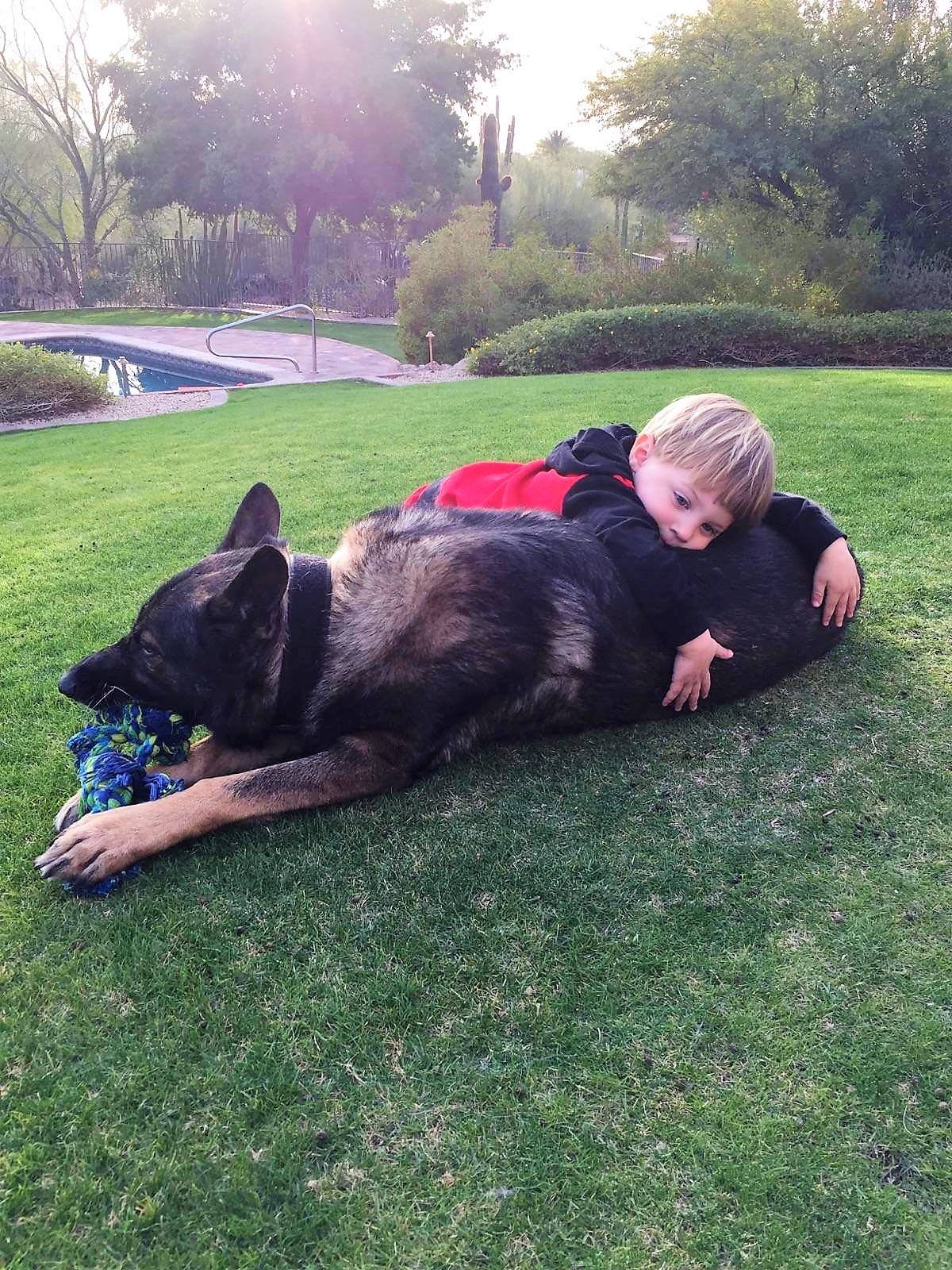
When evaluating a guard dog for family use, breed characteristics are just a starting point. How a dog is selected, trained, and placed as a family protection dog matters as much as the breed itself. The traits below are what actually determine whether a dog will work well in a home with children.
- Temperament stability: The dog remains calm under stress and does not react out of proportion to everyday stimuli like loud noises, sudden movement, or unfamiliar visitors.
- Patience with children: This means children of all ages, including toddlers who move unpredictably and teenagers who may roughhouse. The dog should be reliably gentle in these interactions.
- Threat discrimination: The dog can distinguish between normal household activity and a genuine threat. This is a trained skill, not an instinct.
- Socialization: The dog is comfortable with guests, neighbors, other pets, and new environments without becoming reactive or anxious.
- Handler responsiveness: The dog is obedient to commands and responds reliably to its handler in any situation.
German Shepherd Family Guard Dog
Few breeds match the German Shepherd for versatility. Intelligent, loyal, and highly adaptable, German Shepherds have a long history in law enforcement, search and rescue, and personal protection. In a family setting, they translate those qualities into something that works remarkably well day to day.
German Shepherds tend to be gentle and patient with children while remaining alert to anything out of the ordinary. They bond closely with their immediate family and take that loyalty seriously. Their exercise needs are moderate to high, but inside the home they tend to be calm and settled once their physical and mental needs are met.
Their trainability is exceptional. German Shepherds respond well to structure, learn quickly, and retain commands reliably, which is why they remain one of the most widely used working dog breeds in the world.
Belgian Malinois Family Guard Dog
The Belgian Malinois is the standard for high-performance working dogs. Athletic, driven, and exceptionally responsive, the Malinois is the breed of choice for demanding operational environments around the world. That same capability, when channeled correctly, makes it a formidable family protection dog.
The Malinois bonds closely with its family when properly trained and given consistent structure. It thrives in active households where it receives daily physical and mental engagement. Comparing the Belgian Malinois vs German Shepherd or other similar breeds often comes down to lifestyle: the Malinois demands more, but delivers more for households that can match its energy.
This is not the right breed for sedentary households or first-time dog owners without professional guidance. But for active families working with professional trainers, the Malinois is among the most capable protection dogs available.
Dutch Shepherd Family Guard Dog
The Dutch Shepherd is less visible in mainstream conversations about guard dogs, but it belongs in this discussion. Highly capable, naturally watchful, and deeply loyal to its family, the Dutch Shepherd brings a quiet confidence that works well in a range of household environments.
Dutch Shepherds are intelligent and have a strong work ethic. They tend to be appropriately reserved with strangers without being reactive, which is exactly the balance many families need. They adapt well to different living situations when given consistent structure and engagement, and they form strong bonds with the people they live with.
Their relative rarity in the protection space is not a reflection of their ability. It is more a matter of availability. When placed well and trained properly, the Dutch Shepherd is an outstanding family guardian.
Rottweiler Family Guard Dog
The Rottweiler carries a reputation that is often more intimidating than the dog itself. In a well-structured home, Rottweilers are affectionate, deeply loyal, and surprisingly patient with the children they are raised around.
Their physical presence alone is a deterrent. A large, confident Rottweiler communicates a great deal without doing anything at all. That composure, rather than reactivity, is one of the breed's strengths. Rottweilers tend to assess situations before responding, which makes them reliable rather than impulsive.
They benefit from clear boundaries and consistent leadership. Families who provide that structure get a dog that integrates seamlessly into daily life while taking its protective role seriously. The Rottweiler doesn’t need to be managed constantly, but it does need to be guided well from the start.
Giant Schnauzer Family Guard Dog
The Giant Schnauzer is not the first breed most people think of for family protection, but it deserves attention. Intelligent, alert, and highly trainable, Giant Schnauzers combine a strong territorial instinct with genuine family loyalty.
They are less common in the protection dog space, which makes them an interesting option for families looking for capability without the breed recognition that comes with a German Shepherd or Malinois. Giant Schnauzers require regular grooming and consistent mental engagement. They do best in active households that are familiar with working breeds and can provide the structure and stimulation the breed needs.
With the right training and environment, the Giant Schnauzer is a capable and committed family guardian.
How to Choose the Right Guard Dog for Your Family
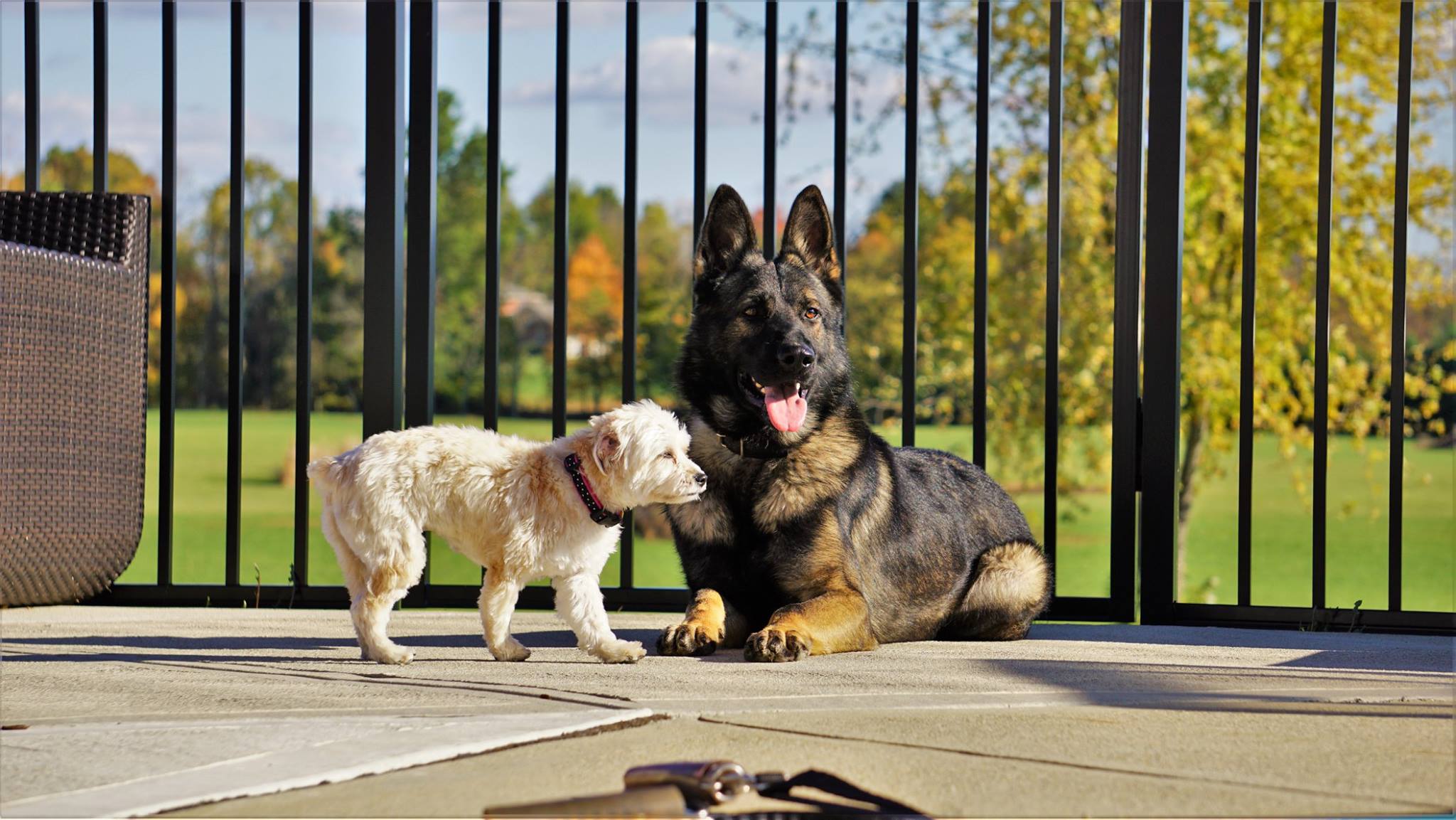
Breed profiles give you a starting point. Your household gives you the answer. The right guard dog for one family may be the wrong fit for another.
Ages of Your Children
Younger children move unpredictably, make sudden noises, and do not always understand how to interact with a dog respectfully. The right breed for a household with toddlers needs exceptional patience and a very stable temperament. Older children can be taught proper handling and interaction, which opens up a broader range of breed options.
Other Pets in the Home
Some working breeds have a strong prey drive that needs to be addressed during training. A dog that has been socialized with cats, small dogs, and other household animals from an early point in its training will integrate more smoothly than one that has not.
Your Living Environment
Active breeds like the Belgian Malinois need space and stimulation. If you have a large yard and an active lifestyle, that is a workable match. If you live in a smaller space or have a quieter routine, a breed with lower energy requirements may serve your household better.
Activity Level and Lifestyle
Working breeds require engagement. Daily physical exercise and mental stimulation are not optional for these dogs. Before choosing a breed, be honest about how much time and energy your household can realistically dedicate to a dog that needs consistent activity.
Experience With Working Breeds
Families who have worked with high-drive breeds before will have an easier time with certain dogs. For families newer to this category, a professionally placed protection dog that comes with handler training and ongoing support is a more reliable path than attempting to source and train independently.
Why Training Matters More Than Breed
An untrained guard dog in a family home is a liability, not an asset. Breed instincts without structure can produce unpredictable behavior, and unpredictability is the last thing you want around children.
Professional training builds what instinct alone cannot: reliable impulse control, consistent obedience, and the judgment to tell a real threat from a normal interaction. Scenario-based training prepares a dog for the specific situations your family is likely to encounter, not generic drills in a controlled setting. According to the AKC, even naturally protective breeds benefit significantly from structured obedience and socialization work.
A professionally placed dog integrates more safely and effectively than one sourced independently and trained at home. The Priority 1 Canine protection dogs available today have completed that full process before placement. The delivery and family training process ensures the dog learns your home, your family, and your routine before it is left in your care.
It is also worth understanding what a well-trained protection dog can do. There is a reason families who want serious protection choose a trained dog over other options. A trained dog can outperform a bodyguard in certain real-world situations, particularly those involving speed of response and presence around children.
Frequently Asked Questions
What is the best guard dog for a family with small children?
German Shepherds and Rottweilers tend to be the most reliable choices for households with young children because of their patience and temperament stability. That said, individual temperament and training matter more than breed. A professionally evaluated and trained dog is always a safer choice than one selected on breed reputation alone.
Are guard dogs safe to have around kids?
A well-trained, properly socialized dog can be very safe around children. The key words are trained and socialized. A dog with strong instincts and no structured training is not a safe bet in a family environment. Professional placement and handler training are what make the difference.
What is the difference between a guard dog and a protection dog?
A guard dog typically alerts and deters. A protection dog is trained to assess and respond to specific threats on command. Protection dogs also go through extensive socialization to ensure they integrate safely into family life, which is not always part of a standard guard dog's training.
Do family guard dogs need professional training?
Yes. For a dog living in a home with children, professional training is not optional. It builds the impulse control, threat discrimination, and handler responsiveness that make a protection dog genuinely safe and reliable.
Can a guard dog get along with other pets?
With proper socialization, yes. Many protection dogs share households comfortably with cats, small dogs, and other animals. This socialization should be part of the dog's training from an early stage, not something introduced after placement.
What size dog is best for family protection?
Larger breeds in the 60 to 130 pound range tend to be most effective for family protection because of their physical deterrence and strength. That said, size without training is not protection. A well-trained medium-sized dog is more reliable than a large, untrained one.
How much does a trained family guard dog cost?
Professionally trained protection dogs typically start around $85,000. That investment reflects the time, expertise, and individual attention required to produce a dog that is safe, reliable, and ready for family life. Dogs available at significantly lower price points generally have not gone through the same level of training or evaluation.
Which guard dog breeds are easiest to train?
German Shepherds and Belgian Malinois consistently rank highest for trainability because of their intelligence, drive, and handler focus. Dutch Shepherds and Giant Schnauzers are also highly trainable. Rottweilers are very capable as well, but tend to respond best to handlers who provide clear, consistent leadership from the start.
How Priority 1 Canine Prepares Guard Dogs for Family Life
We start with the dog. Every animal placed by Priority 1 Canine goes through a rigorous breed selection and individual temperament evaluation process. Not every dog makes it. We are looking for specific qualities: the right combination of drive, stability, and social intelligence that makes a dog genuinely trustworthy in a family environment.
From there, every dog goes through family-specific training tailored to the realities of household life: children, guests, other pets, varying routines, and real-world scenarios. The training is not generic. It is built around what families actually encounter.
When a dog is placed, we come with it. Our hands-on delivery and integration process typically spans three to four days at your home. Your dog learns your environment. Your family learns your dog. We teach you how to handle and work with your protection dog so the relationship starts on solid footing. That process is covered in detail in our delivery and family training process overview.
We also stay connected after placement. Our commitment to every family we work with does not end at the door. Lifetime support and partnership are part of what we provide.
If you are thinking seriously about a protection dog for your family, we would like to talk about what your family needs and whether we are the right fit. Reach out to the team at Priority 1 Canine to get started.