Dutch Shepherd vs. Belgian Malinois: A Buyer's Guide
Debating the two breeds for your own home? We place finished Dutch Shepherds and Belgian Malinois with families and executives nationwide. See the dogs available for placement or talk to Wade about which breed fits your household.
Most buyers researching the Dutch Shepherd and Belgian Malinois find the same thing: two breeds that look and behave similarly, and a pile of online comparisons that stay vague or read like breed registry entries. These articles typically describe the dogs without helping anyone decide.
Breed alone is rarely the deciding factor for a family protection dog. The more useful question is which breed fits a specific household. Priority One Canine places purpose-bred Belgian Malinois, Dutch Shepherds, German Shepherds, and Dobermans as protection dogs in family homes.
Dutch Shepherd vs. Belgian Malinois: How They Compare
These two breeds share the same continental herding lineage, and their capability ceilings for personal protection are nearly identical. The meaningful differences for a buyer come down to appearance, availability, and presence, not working ability. If you are evaluating these breeds side by side, you are already looking at two dogs that can do the same job.
Belgian Malinois | Dutch Shepherd | |
Country of Origin | Belgium | Netherlands |
AKC Recognition | Recognized (Herding Group) | Recognized (Herding Group) |
Typical Height | 22-26 inches | 21.5-24.5 inches |
Typical Weight | 40-80 lbs | 42-75 lbs |
Coat Type & Color | Short, dense double coat; fawn with black mask | Three varieties (short, long, wire); all brindle |
Lifespan | 10-14 years | 11-14 years |
Energy & Drive | Very high | Very high |
Protective Instinct | Strong | Strong |
Family Integration | Excellent when properly selected and trained | Excellent when properly selected and trained |
US Availability | Widely available | Rarer; quality bloodlines limited |
Where the Dutch Shepherd and Belgian Malinois Come From
The Dutch Shepherd, Belgian Malinois, German Shepherd, and the other Belgian sheepdog varieties all emerged from the same population of continental herding dogs in the late 1800s. The geographic origin spans what is now the border region between Belgium and the Netherlands. They were separated more by national breed-club lines than by working behavior.
From there, the two breeds diverged in availability. The Belgian Malinois became globally recognized through 20th-century selection in working programs, and quality dogs are now accessible from multiple sources in the US. The Dutch Shepherd stayed comparatively rare outside the Netherlands, and that scarcity has shaped the market in ways buyers need to understand before they start searching.
That working background is relevant context for availability, and not much more. Both breeds can be excellent family protection dogs when sourced and matched correctly. The AKC maintains a Belgian Malinois breed overview and a Dutch Shepherd breed overview for readers who want the registry-level detail.
Comparing the Dutch Shepherd and Belgian Malinois for Personal Protection
Drive and Trainability
Both breeds rank at the top of the working-dog population for drive, intelligence, and biddability. A well-bred working-line dog from either breed is capable of the same protection work. The comparison is genuinely that close.
Within the Malinois population, sport-line dogs tend to present with more extreme drive than most family homes benefit from. That phenotype is less common in Dutch Shepherds, largely because the gene pool is smaller and has not been as heavily selected toward sport performance.
This is a tendency tied to line selection, not a hard rule about breed. A well-sourced Malinois placed in the right home carries no more drive than the family can manage. But buyers should know the distinction exists, because it matters when you are evaluating dogs.
Presence and Profile
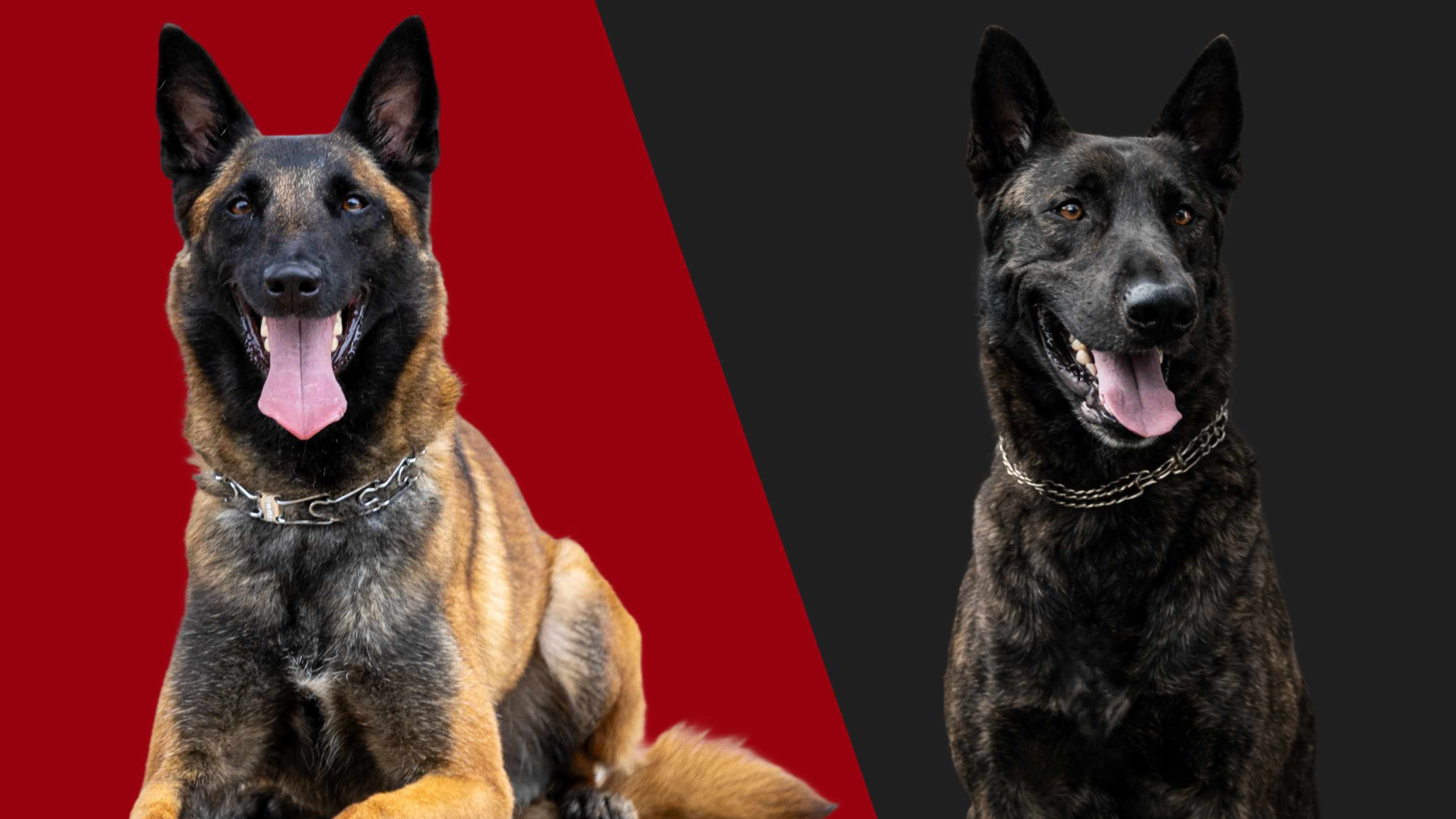
This is where the breeds genuinely diverge for most buyers. The Malinois presents with a fawn coat and a distinct black mask. Most people who have any familiarity with working dogs recognize it immediately as a serious breed. That recognition carries real deterrent value.
The Dutch Shepherd's brindle coat reads differently. To most people, it looks like a shepherd of some kind, without the specific working-dog associations the Malinois carries. For families who want visible deterrence, the Malinois provides it. For families who want capability without drawing attention, the Dutch Shepherd is a more discreet option.
Neither read is wrong. It depends entirely on what the household needs.
Family Integration and Daily Life
Both breeds, properly selected and trained as a family protection dog, integrate fully into family life. They bond closely with the household, are calm in the home when their physical and mental needs are met, and do not require separation from children or guests.
The pattern we see in placements: well-bred Dutch Shepherds tend to downshift from work mode to family mode slightly more easily. Well-bred Malinois often carry a touch more baseline arousal. The difference is real, but it is not large, and it is not a reason on its own to choose one breed over the other. Line selection and individual temperament matter far more than breed name when it comes to daily household behavior.
Coat, Care, and Climate Considerations for Each Breed
The Malinois has one coat type: short, dense, and double-coated in fawn with a black mask. It sheds year-round and more heavily during seasonal coat changes. Grooming needs are modest. A weekly brush and occasional bath cover most of it.
The Dutch Shepherd comes in three coat varieties: short, long, and wire. All three are brindle. The short coat is closest in care to the Malinois. The long and wire coats require more attention and handle cold climates better. The Malinois, with its shorter coat, adapts slightly better to heat.
Both breeds adapt to most US climates and environments. What neither breed adapts well to is kennel life. These dogs need to live with the family, be part of daily routines, and have consistent structured activity. That is not a preference. It is a baseline requirement for either breed to function well.
Sourcing a Well-Bred Dutch Shepherd or Belgian Malinois
Choosing between a Dutch Shepherd and a Belgian Malinois is a simpler decision than finding a well-bred individual dog with the right temperament for a family home.
Belgian Malinois are widely available in the US. The challenge is that most are not from bloodlines selected for family-suitable temperament. Sport-line dogs, show-line dogs, and dogs with no documented working pedigree all circulate in the same market. A buyer without guidance is making a guess.
Dutch Shepherds present the opposite problem. Quality dogs are scarce, and well-bred individuals are concentrated among a small number of programs. That means a longer placement timeline and, realistically, going through a placement program rather than sourcing directly from a breeder.
“World-class bloodlines” is a phrase buyers encounter often without a clear definition. What it actually means: the genetic foundation determines what training can and cannot produce. Temperament, drive, stability, and the capacity to form a genuine bond with a family are all shaped before a trainer ever works with the dog. The wrong line produces the wrong dog, regardless of how much training investment follows.
This is the sourcing problem that Priority One Canine's selection and training process is built to solve. Every dog placed comes from evaluated bloodlines, and the match between dog and family is made deliberately.
How to Choose Between a Dutch Shepherd and a Belgian Malinois
The right approach is to start with the household and match a breed to it, not the other way around. These are the questions that actually shift the answer between the Belgian Malinois protection dog and the Dutch Shepherd protection dog:
What does daily life look like? Both breeds need structured activity and mental engagement every day. A household with an active routine, defined schedules, and consistent leadership suits either breed. A household with frequent long absences and irregular structure will struggle with both.
What kind of presence does the family want? Visible deterrence points toward the Malinois. A lower-profile presence that does not draw attention points toward the Dutch Shepherd.
How flexible is the placement timeline? If the timeline is open, either breed is viable. If the family needs a dog placed quickly, Dutch Shepherds from quality bloodlines are harder to source and typically take longer.
What is the climate and home environment? Both breeds adapt broadly. Families in colder climates who prefer the Dutch Shepherd should expect the long or wire coat and the additional grooming that comes with it.
What level of daily activity can the family provide? Honest answer required here. Both breeds need 1-2 hours of physical and mental activity daily. A Malinois from a sport-selected line may need more. A Dutch Shepherd from a well-managed program may settle slightly more easily, but the baseline commitment is the same.
Breed sits below temperament selection and matching in this decision hierarchy. The dog that fits your home is the right dog, and that determination requires more than picking a breed name.
When a Dutch Shepherd or Belgian Malinois May Not Be the Right Fit
Both breeds are working dogs. Either breed will struggle in a home that cannot provide daily physical activity, consistent mental engagement, and clear structure.
Specific conditions that make either a poor match:
Frequent long absences without a plan for consistent care and supervision
No outdoor space or consistent access to exercise
No structured daily routine the dog can predict and rely on
A household that cannot provide ongoing leadership
An owner who has never had a working dog can succeed with either breed if the lifestyle fits and the placement is done well. An experienced owner in the wrong living situation will have problems.
Finding the Right Fit for Your Family
The right dog for a family is the one selected for that home. Breed is just the starting point of the conversation. The Dutch Shepherd and Belgian Malinois are close enough in capability that the decision usually comes down to availability, presence preference, and the individual dog in front of you. Getting that individual match right is what separates a good experience from a great one.
Priority One Canine specializes in that match. Every placement starts with an honest conversation about the household’s needs and goals.
Dutch Shepherd vs. Belgian Malinois FAQ
Is a Dutch Shepherd or a Belgian Malinois better for a family?
Neither breed is categorically better. Both can be excellent family protection dogs when properly sourced and matched to the household. The more useful question is which individual dog, from which bloodlines, fits a specific home. Breed is a starting point, not a verdict.
Are Dutch Shepherds rarer than Belgian Malinois?
Yes, significantly. Belgian Malinois are widely available in the US, though finding dogs from quality working bloodlines still requires vetting. Dutch Shepherds are comparatively scarce, and well-bred individuals with family-suitable temperament are concentrated among a small number of placement programs. Buyers should expect a longer timeline when sourcing a Dutch Shepherd.
Which breed is more intense, the Dutch Shepherd or the Belgian Malinois?
Drive levels are similar in well-bred individuals from either breed. The distinction more relevant for buyers: Malinois from sport-selected lines tend to present with higher baseline drive than most family homes benefit from. That phenotype is less common in Dutch Shepherds because the gene pool has seen less sport selection. Line matters more than breed name here.
Are Dutch Shepherds and Belgian Malinois good with kids?
Both breeds bond closely with the family, including children, when properly socialized and matched to the household. Neither breed is inherently difficult with kids. Individual temperament and the quality of the placement process matter far more than breed. Priority One Canine evaluates both before any placement.
How much exercise do these breeds need?
Both breeds need substantial daily activity, typically one to two hours of physical exercise plus mental engagement. That means structured work, not just time in the yard. Puzzle activities, training sessions, and focused play all count.
Does Priority One Canine place both Dutch Shepherds and Belgian Malinois?
Yes. Priority One Canine places Belgian Malinois, Dutch Shepherds, German Shepherds, and Dobermans. Every dog is hand-selected from evaluated bloodlines and matched to the household before placement. Browse available protection dogs or reach out to discuss which breed fits your family.