
The 10 Most Protective Dog Breeds in the World
Rankings are a starting point. The right question is which dog fits your home. Priority 1 Canine places finished trained protection dogs matched to your family and delivered personally by Wade Morrell. See the dogs available now or what a placement costs.
“Protective” is one of the most overused words in the dog world. Size, reputation, and appearance get thrown around as substitutes for what actually matters. Our ranking of the top 10 most protective dogs is built on traits that hold up under real-world pressure: trained response on command, stable temperament across environments, and the capacity to discriminate between a genuine threat and everyday activity.
If you’re wondering which breed is the most protective, there is no single answer because it depends on the handler and the situation. Belgian Malinois, German Shepherds, and Dutch Shepherds consistently top working-dog rankings for a reason: high drive, sharp intelligence, and a strong handler bond. Rottweilers and Dobermans bring physical presence and strong territorial tendencies to the equation.
What every breed on this list shares is a foundation that professional training can build on. Breed sets the ceiling. Training and temperament determine how close a dog gets to it.
What Actually Makes a Dog Protective?
Not all protective behavior is equal. Genuine protection comes from a specific combination of traits.
These traits are rare to find together naturally and require professional development to function reliably. They separate a truly protective dog from one that’s simply reactive:
Controlled response: acting on command, not on impulse
Threat discrimination: recognizing a real threat versus normal activity
Composure under pressure: remaining stable in high-stress environments
Handler bond and responsiveness: deferring to the owner, not acting independently
Environmental stability: performing consistently across different settings
A dog missing any one of these traits can create problems rather than solve them. That’s why guard dog traits matter far more than breed alone when evaluating real-world suitability.
At a Glance: Top 10 Protective Breeds Compared
Breed | Protective Instinct | Trainability | Energy Level | Family Compatibility | Size | Best Suited For |
Belgian Malinois | Very High | Very High | Very High | High (trained) | Medium | Experienced, active handlers |
German Shepherd | High | Very High | Moderate–High | Very High | Large | Families, versatile use |
Dutch Shepherd | Very High | Very High | High | High | Medium | Active families, working roles |
Rottweiler | High | High | Moderate | High | Large | Structured households |
Doberman Pinscher | High | High | High | Moderate-High | Large | Active, experienced handlers |
Giant Schnauzer | High | High | High | Moderate-High | Large | Active families, working use |
Cane Corso | High | Moderate | Moderate | Moderate | Very Large | Experienced handlers, estate protection |
Bullmastiff | Moderate-High | Moderate | Low-Moderate | High | Very Large | Low-energy households, deterrence |
Boxer | Moderate-High | Moderate-High | High | Very High | Medium-Large | Families with children |
Akita | High | Moderate | Moderate | Moderate | Large | Experienced handlers, single-pet homes |
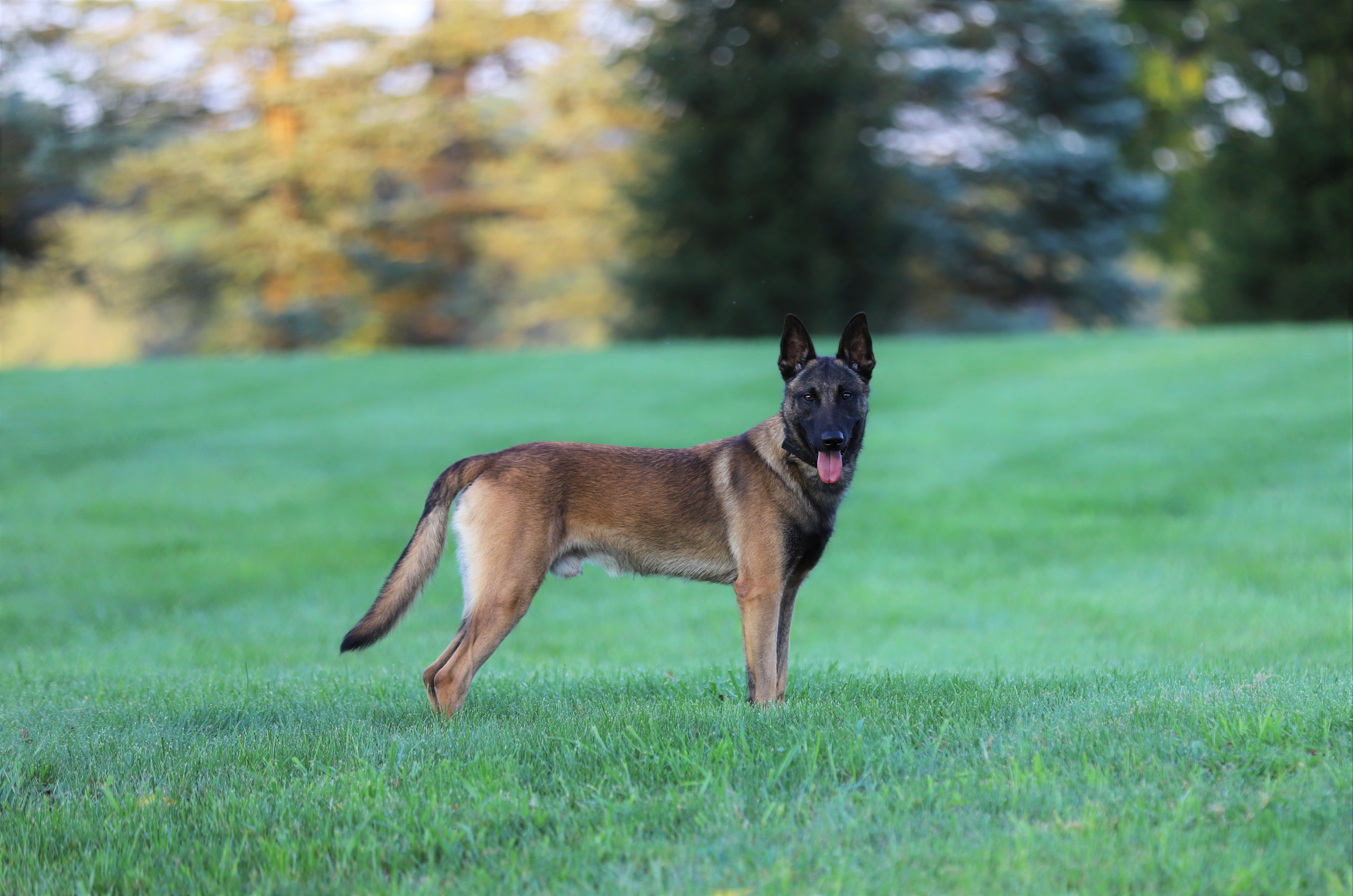
1. Belgian Malinois
The Belgian Malinois is widely regarded as the premier working protection dog in the world. Military units, federal law enforcement, and elite security operations rely on them because they deliver. Speed, athleticism, and responsiveness make them exceptional in high-demand roles.
They thrive with experienced, active handlers who can meet their significant physical and mental needs. Without that outlet, their drive can become difficult to manage. With the right structure and professional training, they integrate seamlessly into family life; they are alert when it counts, calm when it doesn’t.
The American Kennel Club traces the breed's origins back to late 19th-century Belgium, where the Malinois was developed as a herding and working dog before finding its way into military and law enforcement roles worldwide.
2. German Shepherd
Few breeds have the track record of the German Shepherd. They’ve served in law enforcement, military operations, search and rescue, and personal protection for over a century. Their intelligence and loyalty make them one of the most versatile working dogs in existence.
German Shepherds bond deeply with their families and adapt well to varied environments. They have moderate-to-high exercise needs, but carry a calm indoor presence that makes them well-suited to family life. Their combination of trainability and temperament is hard to match among the best protection dog breeds available today.
3. Dutch Shepherd
The Dutch Shepherd doesn’t carry the same name recognition as the Malinois or German Shepherd, but those who work with them know the gap in reputation doesn’t reflect a gap in capability. Sharp intelligence and strong work ethic make them a serious option for protection work.
They’re family-loyal and adaptable to different environments when given consistent structure. With strangers, they tend to be appropriately reserved without tipping into reactivity, which is a distinction that matters when evaluating a dog for real-world use. For families who want a capable protection dog that won't draw attention on a walk or in public, the Dutch Shepherd is worth a serious look.
4. Rottweiler
The Rottweiler’s physical presence is its first line of deterrence. They are confident, calm, and imposing. That composure is one of their defining traits; Rottweilers tend to assess before they react, which makes them reliable rather than reactive.
At home, they’re deeply loyal and affectionate with their family. They require structured leadership and consistent boundaries, but respond well to experienced handling. When trained and socialized properly, a Rottweiler is one of the most dependable protection dogs available, due to calm strength paired with genuine devotion.
5. Doberman Pinscher
The Doberman Pinscher was purpose-bred for personal protection from the start. They were developed in the late 19th century by a German tax collector who wanted a dog capable of accompanying him on dangerous routes. That original intent still shapes the breed today. Dobermans are sleek, athletic, and highly alert, with strong territorial tendencies and a close bond to their handler.
They require consistent socialization and structured training to develop reliably. Without it, their drive and alertness can become difficult to manage. With it, they’re an excellent fit for active households with experienced handlers who understand working breeds.
6. Giant Schnauzer
The Giant Schnauzer is less common in the protection space than the shepherd breeds, but those who know them understand why they belong on this list. They’re intelligent, alert, and highly trainable, with a strong territorial instinct paired with genuine loyalty to their family.
They require regular grooming and consistent mental engagement to stay balanced. Their energy and drive make them a strong fit for active families already familiar with working breeds. In the right hands, they’re a capable and devoted protection dog that tends to be underestimated.
7. Cane Corso
The name translates to “bodyguard dog,” and it’s an accurate description. The Cane Corso has been bred for protection since ancient Rome, and that history is evident in their demeanor: calm, confident, and imposing without being reactive. They don’t need to perform aggression because their presence alone is often enough.
They bond closely with their family and carry a natural suspicion of strangers. That combination requires experienced handling, early socialization, and clear structure to channel productively. The Cane Corso is not a casual pet, but may be suitable for the right handler who understands large working breeds.
8. Bullmastiff
The Bullmastiff was originally developed in England to stop poachers on large estates, which was a job that required physical power, silent tracking, and the judgment to apprehend without seriously injuring. That heritage produced a breed defined by calm authority rather than high-energy response.
They’re large and powerful with lower exercise needs than most working breeds, relying on physical presence and sound judgment rather than drive-based reaction. For households that want genuine deterrence without the demands of a high-drive dog, the Bullmastiff offers a quieter but effective approach.
9. Boxer
Boxers bring natural playfulness and energy, but that personality sits alongside a genuine protective instinct toward their family. They’re alert and appropriately suspicious of strangers while remaining welcoming with those they know. Their muscular build and athleticism make them a credible physical deterrent despite their more approachable temperament.
They retain puppy-like energy well into adulthood, which pairs naturally with active families and children. Their exercise needs are regular but generally lower-maintenance than high-drive working breeds, making them a solid option for families who want protection capability alongside an engaged, affectionate companion.
10. Akita
The Akita is one of the most loyal and territorial breeds in existence. Originally bred in Japan for guarding and hunting, they carry that purpose quietly; they’re reserved by nature and don’t bark without reason. That selective alerting makes their response meaningful. When an Akita signals, it’s worth paying attention.
They’re strong-willed and independent, requiring confident, experienced handling to develop properly. They bond deeply with their immediate family but can be aloof or standoffish with strangers. It’s a trait that, managed well, is an asset in a protection context. They are best suited to homes without other dogs, and to handlers who understand and respect their nature.
How to Choose the Most Protective Breed for Your Situation
The right protection dog is ultimately determined by how well the dog’s traits match your lifestyle, environment, and level of experience. These are the factors that matter most.
Personal Protection vs. Property Protection
Dogs bred for personal protection, like the Belgian Malinois and Doberman, are built for close-proximity work. They’re responsive, mobile, and handler-focused. Dogs suited to property deterrence, like the Bullmastiff or Cane Corso, are better described as stationary anchors: imposing, calm, and effective within a defined space. Knowing what you need first narrows the field significantly.
Family Environment and Children
Breeds with high family compatibility, like the German Shepherds, Boxers, Rottweilers, integrate well into households with children when properly trained. High-drive breeds like the Belgian Malinois can also be among the best guard dogs for families, but they require professional training and an owner committed to consistent structure. A dog without that preparation isn't ready for a family environment.
Activity Level and Lifestyle
High-drive breeds demand high output. A Belgian Malinois or Dutch Shepherd without adequate physical and mental engagement will find its own outlet, and that’s rarely something an owner wants. Lower-energy breeds like the Bullmastiff are a better match for quieter households. Be honest about your daily capacity before selecting a breed.
Experience With Working Breeds
Some breeds on this list are forgiving of less experienced handlers. Others are not. Breeds with strong independence, high drive, or dominant tendencies, like Akitas, Cane Corsos, Giant Schnauzers, require confident, knowledgeable handling to develop correctly. If you’re newer to working breeds, starting with a professionally trained and placed dog is the most reliable path to a successful outcome.
Why the Most Protective Breeds Still Need Professional Training
Protective instinct without training produces unpredictable behavior. A dog that responds to perceived threats on its own judgment, without handler direction, is a liability regardless of breed.
Professional training accomplishes several things that instinct alone cannot:
Temperament screening identifies dogs with the right foundational traits before training begins
Scenario-based training builds judgment, impulse control, and the ability to escalate and de-escalate appropriately
Handler-specific conditioning ensures the dog responds to its owner, not just to a trainer
Household integration prepares the dog for real daily life, not just controlled environments
At Priority One Canine, every dog goes through this process before placement. Our Priority One Canine protection dogs are evaluated, trained, and placed with households based on lifestyle and goals. After placement, our delivery and family training process ensures the transition into your home is handled with the same rigor as the training itself.
How Priority One Canine Trains the Most Protective Dogs in the World
Every dog Priority One Canine placement begins with selection. Breed provides the foundation, but individual temperament determines real capability. We screen for dogs that demonstrate the right combination of drive, stability, and handler responsiveness before a single training session begins. Most candidates don’t make the cut.
From there, every dog undergoes scenario-based training built for real-world reliability. Protection work, environmental exposure, impulse control, and family integration are built into the process systematically. By the time a dog is placed, it’s prepared for your actual life.
Placement isn’t the end of the relationship. Our hands-on delivery process brings the dog directly into your home, with training sessions for your family included. That support continues long after delivery.
If you’re ready to understand what a family protection dog looks like in practice, or want to explore whether a protection dog is right for your situation, reach out to our team. We take every placement seriously because every situation is different.
Explore our available protection dogs or contact us to start a conversation.
Frequently Asked Questions
What is the number one most protective dog breed?
The Belgian Malinois is widely considered the top working protection dog in the world, based on its use in elite military and law enforcement applications. That said, “number one” depends on the handler and the context. For family environments, a professionally trained German Shepherd or Rottweiler may be a stronger fit than a high-drive Malinois.
Are protective dog breeds safe to own?
Yes, when properly selected, trained, and placed. Breed alone doesn’t determine safety. A professionally trained protection dog with stable temperament and good handler communication is typically safer and more predictable than an untrained dog with protective instincts. Temperament screening before purchase matters more than breed reputation.
What is the difference between a protective dog and a guard dog?
Guard dogs are typically used to secure property or signal intrusions. Protection dogs are trained for direct personal protection: responding on command, apprehending threats, and operating under handler direction in real-world situations. The training requirements, cost, and temperament standards are significantly higher for true protection dogs.
Do protective dogs need special training?
Yes. Protective instinct without training produces unpredictable behavior. Genuine protection capability requires structured, scenario-based training that builds impulse control, threat discrimination, and reliable handler responsiveness.
Which protective breed is best for first-time owners?
Most high-drive protection breeds are not well-suited to first-time owners without professional support. The safest path for someone new to working breeds is purchasing a fully trained, professionally placed dog. This removes the training burden and ensures the dog has already been evaluated for temperament and family compatibility.
Can small dogs be protective?
Small dogs can be alert and vocal, which can be useful for detecting unusual activity. But physical deterrence and genuine protection capability require size, strength, and specific temperament traits that small breeds don’t typically carry. For real-world personal protection, the breeds on this list represent the field for good reason.
How do I know if a protection dog is right for my family?
The right fit depends on your lifestyle, experience level, household dynamics, and what you need the dog to do. Families with children, limited working-dog experience, or busy schedules may benefit most from a breed with high family compatibility and a calm indoor presence. Speaking with a professional trainer or placement specialist before choosing a breed is the most reliable way to find the right match.